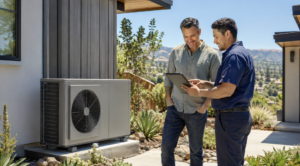
California has long been associated with technological innovation. From Silicon Valley software companies to clean-energy research and advanced building systems, the state often provides an early look at technologies that eventually become commonplace throughout the country. One of the latest changes is occurring inside homes and commercial buildings, where heating and cooling equipment is becoming more intelligent, responsive, and efficient.
Modern heat pumps are no longer simple mechanical systems that turn on when a thermostat detects a temperature change. Today’s equipment can use variable-speed compressors, connected thermostats, environmental sensors, energy-monitoring software, and automated controls to regulate indoor comfort more precisely. These developments are particularly relevant in San Jose, where technology, sustainability, rising energy costs, and changing weather conditions regularly intersect.
The movement toward smarter heat pumps is not based on a single invention. It is the result of progress in information technology, equipment engineering, energy policy, and consumer demand. Together, these forces are changing how California homes and businesses manage heating and cooling. 🌡️
Why Heat Pumps Fit San Jose’s Technology-Driven Culture
San Jose sits at the heart of Silicon Valley, a region known for treating everyday problems as opportunities for innovation. That same mindset is now influencing residential and commercial comfort systems. Heating and cooling equipment is increasingly expected to provide data, communicate with other devices, automate routine adjustments, and operate efficiently without requiring constant attention.
The basic function of a heat pump remains straightforward. As explained in the Wikipedia overview of heat pumps, the equipment transfers heat from one location to another. During colder weather, it moves available heat from outside into a building. During warmer weather, the process reverses, moving indoor heat outside.
What has changed is the intelligence controlling that process. Advanced systems can adjust compressor speed instead of repeatedly operating at full capacity. They can respond to indoor humidity, changing outdoor conditions, occupancy patterns, and thermostat schedules. Some systems can also provide homeowners with energy reports or send alerts when equipment performance begins to decline.
For property owners researching Heat Pumps San Jose, these technological improvements can mean steadier temperatures, better energy management, and a more convenient way to control year-round comfort.
Information Technology Is Changing Indoor Climate Control
Traditional heating and cooling systems generally operated according to a basic cycle. The thermostat detected that the temperature had moved beyond its set point, activated the equipment, and turned it off after the desired temperature was restored. Although dependable, this approach could create temperature swings and unnecessary energy use.
Modern heat pumps can make smaller and more frequent adjustments. A variable-speed system may operate at a lower level for an extended period instead of repeatedly starting and stopping at maximum power. This measured operation can help maintain a more consistent temperature while reducing the abrupt bursts of noise and airflow associated with older equipment.
Connected controls add another layer of precision. A compatible smart thermostat may learn when a household is normally occupied, recognize temperature preferences, and reduce unnecessary operation when no one is home. Remote access allows users to review or change settings from a phone, tablet, or computer.
This type of digital development reflects California’s broader commitment to using technology more effectively. The California Department of Technology focuses on innovation, strategy, and the practical delivery of technology across state government. Although a residential heat pump is different from a government information system, both developments illustrate a larger California trend: using reliable data and connected tools to make everyday systems more responsive and efficient. 💻
Smart Sensors Make Heat Pumps More Responsive
Sensors are central to the growing intelligence of modern heat pumps. A standard thermostat measures temperature in one location, but a connected system can gather information from several points throughout a home or building. Depending on the installation, sensors may monitor temperature, humidity, occupancy, airflow, and outdoor conditions.
That information helps the system respond to the building’s actual needs. A room receiving direct afternoon sunlight may require different cooling than a shaded room on the opposite side of the property. A busy family room may need more airflow than an unoccupied guest room. Properly designed controls can account for these differences and reduce the need to overheat or overcool the entire building.
Some systems also collect operating data that can assist with maintenance. Changes in runtime, pressure, temperature, or airflow may indicate a developing problem. An early alert can give the property owner an opportunity to schedule service before a minor performance issue becomes an unexpected breakdown.
California’s official State Digital Strategy emphasizes efficient growth, responsible technology, improved services, and human-centered design. Those principles also describe what consumers increasingly expect from connected home equipment. Technology should not make an ordinary task unnecessarily complicated. Its greatest value comes from quietly improving performance, convenience, and reliability.
Variable-Speed Technology Improves Efficiency
One of the most important heat-pump advancements is the variable-speed compressor. Older single-stage equipment typically has two operating conditions: fully on and completely off. A variable-speed unit can increase or decrease its output according to current demand.
On a mild San Jose day, a home may need only a small amount of heating or cooling. Running at a reduced speed can use less electricity than repeatedly activating a system at full capacity. Lower-speed operation may also support more consistent indoor temperatures, improved humidity management, and quieter performance.
The U.S. Department of Energy explains that heat pumps can be significantly more efficient than conventional heating systems because they transfer heat instead of generating it directly. Advanced compressors, fans, motors, and controls help modern systems make even better use of that operating principle.
Efficiency still depends on more than the equipment label. Correct sizing, professional installation, proper refrigerant levels, adequate airflow, sealed ductwork, and routine maintenance all influence performance. Even sophisticated technology cannot completely compensate for a poorly designed or improperly installed system.
Cleaner Heating Supports California’s Energy Direction
Heat pumps are receiving attention not only because they are technologically advanced, but also because they support California’s building-electrification goals. A heat pump provides heating without burning natural gas inside the home. It can also provide air conditioning, allowing one system to serve both seasonal needs.
The California Energy Commission describes heat pumps as highly efficient electric technologies that can produce fewer emissions than traditional heating and water-heating equipment. The commission has also reported substantial adoption across California, particularly in new residential construction.
The environmental impact of an individual system depends on several factors, including equipment efficiency, local electricity generation, building insulation, operating habits, and the system being replaced. Still, California’s continuing expansion of renewable electricity strengthens the case for efficient electric equipment.
The California Public Utilities Commission identifies heat pumps as an important all-electric option for space heating, air conditioning, and water heating. This connection between building technology and a cleaner electrical grid is one reason heat pumps have become prominent in discussions about California’s energy future. 🌱
Smart Controls Can Respond to Energy Demand
Electricity does not have the same cost or environmental impact at every hour of the day. Demand rises and falls, renewable-energy availability changes, and time-of-use electricity rates can affect household expenses. Connected heat pumps and thermostats may help property owners respond to these changes more effectively.
A homeowner might pre-cool a well-insulated house before a higher-priced period begins, then allow the temperature to rise slightly while electricity is more expensive. Similar strategies can be used for heating, provided that comfort and safety remain protected. Automation can make these small adjustments easier to manage.
California’s updated building standards increasingly recognize the relationship between equipment controls and the electric grid. The California Energy Commission’s coverage of the state’s Energy Code update describes provisions that encourage heat pumps and allow residents to use smart thermostats capable of responding to energy-pricing information.
This does not mean homeowners must surrender control of their indoor environment. The better approach is to give users useful information and flexible settings. A connected system should make energy management simpler while allowing the people inside the building to decide what level of comfort works for them.
Predictive Maintenance Could Prevent Costly Failures
Maintenance has traditionally been scheduled according to the calendar or requested after a noticeable problem appears. Connected equipment is helping create a third option: maintenance guided by operating data.
A heat pump that begins running longer than normal may have a clogged filter, airflow restriction, refrigerant issue, failing component, or unusual load. A sensor cannot diagnose every problem independently, but equipment data can give a trained technician valuable clues. Remote monitoring may also help identify intermittent faults that are difficult to reproduce during a short service appointment.
Predictive maintenance has been used for years in manufacturing, transportation, data centers, and other technology-dependent industries. Applying a similar concept to heating and cooling equipment can improve reliability and help owners address small problems earlier.
Data security must remain part of the conversation. Any internet-connected thermostat or control system should be protected with a strong password, current software, secure home networking, and multifactor authentication when available. Convenience is valuable, but connected-home technology should always be managed responsibly. 🔐
Rebates Can Make Efficient Technology More Accessible
Advanced heat pumps may cost more initially than basic replacement equipment. California and federal programs have attempted to reduce that barrier through rebates, financing, tax incentives, and other forms of support.
The California Energy Commission’s residential energy rebate information outlines programs that may provide substantial assistance to qualifying households installing efficient heat-pump systems. Eligibility, funding, contractor requirements, equipment standards, and available amounts can change, so homeowners should verify current program details before making a purchase.
Financial incentives should be treated as one part of the decision rather than the only reason to select a system. Property owners should also consider expected energy use, installation quality, warranty coverage, noise, equipment placement, electrical capacity, ductwork condition, and the installer’s experience with heat-pump technology.
A carefully selected and properly installed system is more likely to deliver the efficiency and comfort promised by the equipment specifications.
San Jose Buildings Present Different Installation Needs
No single heat pump is right for every property. San Jose includes older homes, modern developments, townhouses, apartments, offices, retail spaces, and mixed-use buildings. Each structure presents its own heating and cooling requirements.
An older home may need electrical upgrades, duct repairs, additional insulation, or air sealing before new equipment can perform at its best. A newer high-efficiency building may require a smaller system than its square footage initially suggests. A ductless heat pump may be practical for a home addition or a property without conventional ductwork, while a central system may be more suitable for an existing whole-house air-distribution network.
Local climate is important, but it is only one factor. Window area, ceiling height, orientation, insulation, occupancy, air leakage, and heat-producing appliances all contribute to the building’s load. Professional load calculations are more reliable than selecting equipment solely by matching the capacity of an older unit.
Technology works best when it is paired with sound building science and careful installation.
Conclusion
San Jose heat pumps are becoming smarter because the technology around them is improving. Variable-speed compressors provide more precise output, sensors collect useful information, connected thermostats simplify control, and monitoring tools can reveal performance problems earlier. At the same time, cleaner electricity and California’s building-efficiency policies are increasing interest in electric heating and cooling.
The result is more than a new generation of HVAC equipment. It is a shift toward indoor climate systems that can respond to building conditions, energy costs, user preferences, and maintenance needs with greater precision.
For San Jose property owners, the most successful upgrade will combine advanced equipment with correct sizing, professional installation, secure controls, and realistic expectations. When those pieces come together, a modern heat pump can provide efficient year-round comfort while fitting naturally into California’s technology-driven future. ⚡